शनिवार, 10 नवंबर 2018

Can this carbon capture technology save us from climate change?


The UK's Drax power station is set to begin a pilot project testing Bioenergy Carbon Capture and Storage.
London (CNN)It's a stark prognosis: To save the world from the worst effects of climate change, it's likely not enough to cut carbon dioxide emissions; we need to start scrubbing carbon pollution from the atmosphere, too.
And not just a little bit of carbon. Vast amounts of it.
The problem is, the jury is still out on whether that's even possible.
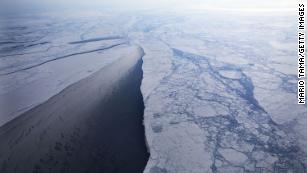
Last month, a report from the global authority on climate science, the Intergovernmental Panel on Climate Change (IPCC), warned of the catastrophic consequences likely to result if humans cause global temperatures to rise more than 1.5 degrees Celsius above pre-industrial levels. The group also said that if we want to stay below the 1.5 degree limit, we'll need to use technologies that remove carbon dioxide (CO2) from the air.
    But the report noted that carbon removal at the scale that's likely required is "unproven and reliance on such technology is a major risk in the ability to limit warming to 1.5°C." In other words, don't solely bank on an unproven technology when your future is on the line.

    Burning fuel to clean the air

    Just how much CO2 we need to pull from the air depends on how much of that heat-trapping gas we keep pumping into the atmosphere.
    If we fail to make dramatic cuts -- which is how things stand with current global emissions pledges -- by the end of the century we might need to remove a total of around 30 times the CO2 that the world currently emits each year, according to the IPCC report.
    There are many methods we might use to remove CO2 from the air, from the low-tech -- simply planting more trees -- to the speculative -- adding iron to the oceans to speed the uptake of atmospheric CO2 by microscopic plant life.
    But one method that's got a lot of attention from IPCC scientists is known as Bioenergy with Carbon Capture and Storage, or BECCS. Essentially, it means growing bioenergy crops and then burning them at power stations to create energy, while capturing the CO2 that's emitted.
    When the bioenergy crops grow, they absorb carbon dioxide from the atmosphere. As long as the CO2 captured when they are burned is safely stored, the process is considered carbon negative.
    Of course, it's not quite that simple. Growing, collecting, transporting and processing the crops will have a carbon footprint, but advocates believe that if the process is well managed, BECCS can be an important tool in removing atmospheric CO2.
    Along with tree planting, BECCS is the CO2 removal method most used by the IPCC in its scenarios for limiting global warming.
    Niall MacDowell, who leads the Clean Fossil and Bioenergy Research Group at Imperial College, London, says: "BECCS tends to come out as the preferred technology in many of the scenarios because in addition to removing CO2 from the atmosphere, it also generates power and is therefore a more cost-effective way to deliver these negative emissions."

    The problem with BECCS

    Inevitably, BECCS has its drawbacks.
    As well as the difficulties in ensuring the bioenergy is carbon neutral, there is the problem of carbon capture.
    "There are very few examples of carbon capture and storage at large-scale power generating facilities that have come in on cost and work as expected," says Glen Peters, research director at the Center for International Climate Research, in Norway.
    "Large-scale" is the key adjective here for carbon capture, but even more so for bioenergy.
    In some emission scenarios, a land area bigger than India would be needed to grow the required bioenergy crops. That land might otherwise be used for forestry or to produce the food needed by a growing global population. Then there's the question of how much water is needed, and how much carbon is released by converting land for growing bioenergy crops.
    But MacDowell has studied the potential for BECCS to be rolled out at scale and believes it is possible, in theory at least.
    "My research indicates it can work but you have to be very careful to do it the right way," he says.
    "If one were not careful to astutely manage and optimize the entire supply chain, starting from land that's used for production of biomass right the way across the supply chain to harvesting and processing and final conversion to an energy product and effective sequestration of the CO2, then it might not work."
    But on top of the land needed to grow the crops, there is the land needed to store the CO2 indefinitely, and the infrastructure needed to move the CO2 there.

    Power station pilot

    So is BECCS a dead end? A dangerous distraction from the crucial business of cutting emissions? Some argue exactly that. Others see huge potential.
    There are some small BECCS projects already running, but this month, a facility in the north of England is set to become the first power station in the world to start piloting the technology.
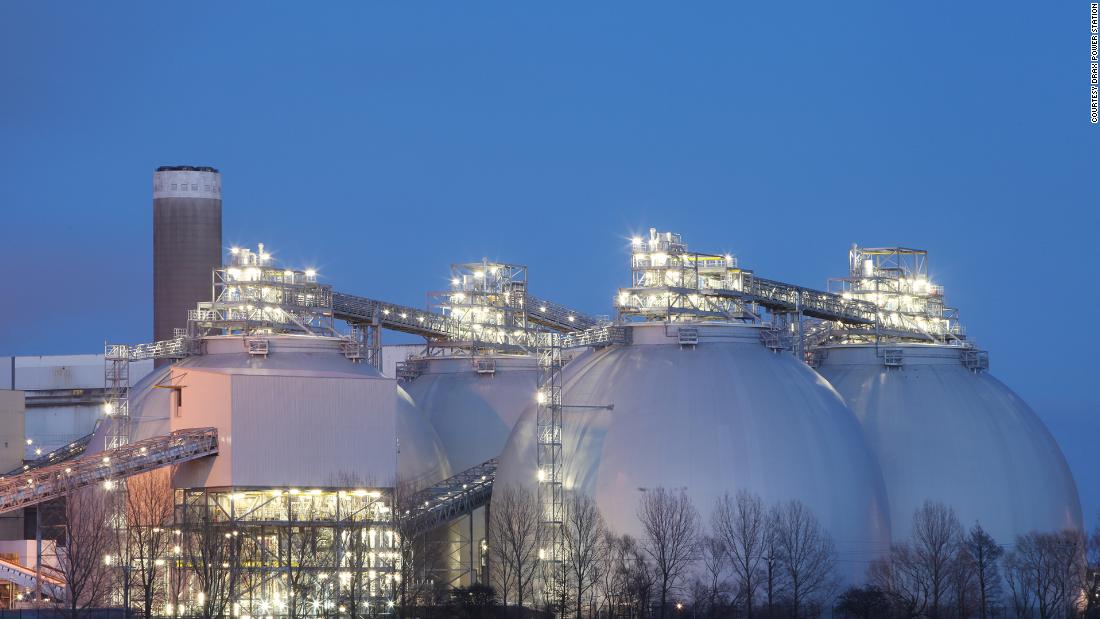
    Drax power station provides about 6% of the UK power supply. When it opened in the 1970s it burned only coal but these days, four of its six generators are powered solely by biomass.
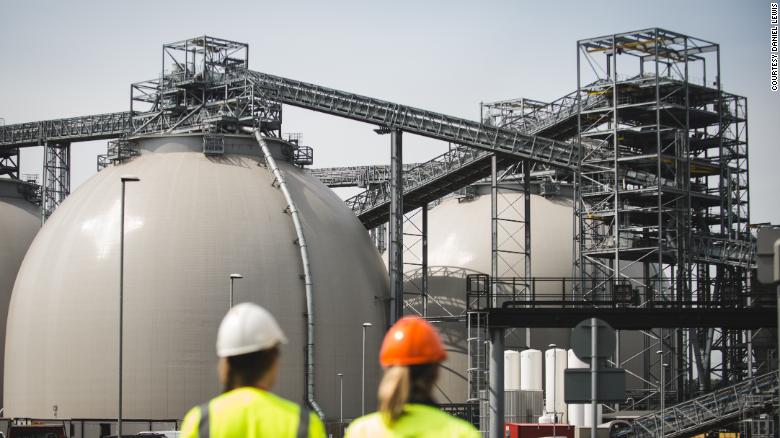
    Biomass domes at Drax.
    It claims that by using sustainably sourced biomass from managed forests in the United States, it saves at least 80% of the CO2 it would have emitted by burning coal (the missing 20% is down to supply chain emissions).
    Remember, burning biomass still emits CO2 (actually, slightly more than coal, per unit of energy produced), but if Drax can capture that and either reuse or store it, then in theory, the process becomes carbon negative. Power generation that actually removes atmospheric CO2.
    Drax is working with a local company called C-Capture, which has developed a chemical to trap the CO2 from its biomass flue gases. The technology has been tested in the lab and the plan is to trial it at the power station.
    If Drax were to scale up the technology, Koss says a pipeline could be built to deliver the CO2 to disused North Sea oil or gas fields or aquifers, for long-term sequestration.
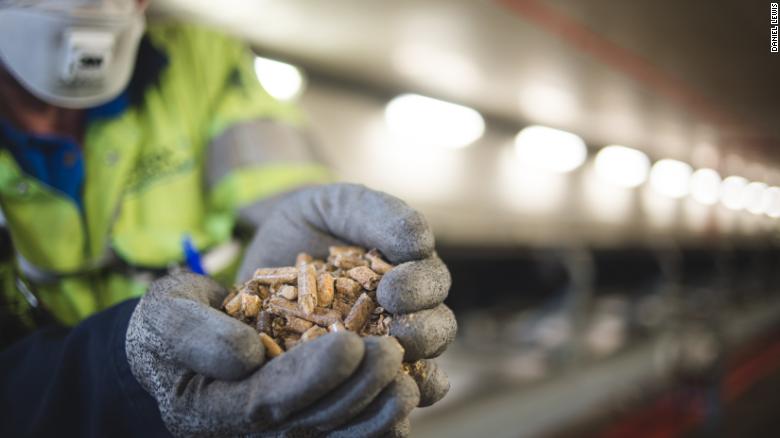
    The biomass pellets used at Drax
    If other power stations and heavy industries in the region were to also implement carbon capture, Koss says they could hook up to the same pipeline, driving down costs.
    But experts say that at the moment there's little economic incentive for large BECCS projects, and that governments should be providing more support.

    The risk we're taking

    Koss sees scope for some large-scale BECCS deployment around the world, but acknowledges there are limits to the amount of sustainable biomass that can be produced.
    If BECCS has a role to play in carbon removal, it will need to be alongside other methods.

    "The least helpful thing we can do at the moment is get captured by some sort of hype cycle where we get overly excited by one technology," says MacDowell.
    When it comes to fighting climate change, experts say the priority must still be to reduce emissions immediately.
      Peters warns of the dangers of us cutting emissions too slowly, in the hope that an unproven technology will one day make up for our inaction.
      "The IPCC scenarios (for reducing emissions) are based on the assumption that we have large-scale negative emissions," he says. "The risk there is that we're choosing a pathway today that depends on us having this technology in the future -- if we don't have this technology, future generations will pay the consequences."

      सोमवार, 5 नवंबर 2018

      सोमवार, 5 नवंबर 2018 Lake Natron Where Birds instantly turn into stones


      •  
      •  
      •  
      •  
      •  
      •  


      Lake That Turns Animals to Stone? Not Quite
      The body of a flamingo on Lake Natron, as captured by photographer Rick Brandt.
      Credit: © Nick Brandt 2013 Courtesy of Hasted Kraeutler Gallery, NY
      Lake Natron in Tanzania is one of the most serene lakes in Africa, but it's also the source of some of the most phantasmagorical photographs ever captured — images that look as though living animals had instantly turned to stone.
      The alkaline water in Lake Natron has a pH as high as 10.5 and is so caustic it can burn the skin and eyes of animals that aren't adapted to it. The water's alkalinity comes from the sodium carbonate and other minerals that flow into the lake from the surrounding hills. And deposits of sodium carbonate — which was once used in Egyptian mummification— also acts as a fantastic type of preservative for those animals unlucky enough to die in the waters of Lake Natron.
      Despite some media reports, the animal didn't simply turn to stone and die after coming into contact with the lake's water. In fact, Lake Natron's alkaline waters support a thriving ecosystem of salt marshes, freshwater wetlands, flamingos and other wetland birds, tilapia and the algae on which large flocks of flamingos feed. Now, photographer Nick Brandt has captured haunting images of the lake and its dead in a book titled "Across the Ravaged Land" (Abrams Books, 2013). [Photos: Lake Natron Gives Up Its Dead]

      क्यों बन जाती है लेक नाट्रन पक्षियों का कब्रगाह ?

      गहरे लाल रंग की चमक लिए हुए है इस झील की सतह का  पानी जिसे लेक नाट्रन के नाम से जाना जाता है। अफ्रिका की मशहूर रिफ्ट वैली का आकर्षण बनी हुई है यह झील। झील क्या यूं समझ लीजिये साबुन और कागज़ बनाने के काम में आने वाले तथा कपडे धोने में प्रयुक्त होते आये एक रसायन कास्टिक सोडा की यह मायावी चमक और आभा है जो पक्षियों को भरमा कर उन्हें ज़िंदगी की आखिरी डुबकी लगवा देती है बाहर आते आते उनका शरीर कैल्सियम लवणों के जमा होने से सीपी और शंख सा कठोर हो जाता है। जीवित पक्षी का बुत  इस कुदरती तुषार म्यज़ियम का  हिस्सा बन जाता है हमेशा हमेशा के लिए ममी बन जाती है उसकी। ऐसा होता है यह रसायन का पक्का लेप.
      इस झील में कॉस्टिक सोडा और साल्ट का डेरा है अतिरिक्त सांद्रण है। 

      रंगबिरंगे कुछ ख़ास शैवालों एक ख़ास मच्छी (The Alkaline Tilapia )और फ्लेमिंगो पक्षी का प्रजनन स्थल बनी हुई है यह झील।नमकीन खारे जल से पोषण प्राप्त करने वाले कुछ जीव -आवयविक संगठन (सूक्ष्मतर जीव )यहां पल्लवित होते हैं। इन्हीं में शरीक है  एक नीली हरे वर्ण की खूबसूरत मनमोहक नयनाभिराम शैवाल स्पिरुलिना (Spirulina algae) जिसमें एक लाल रंजक मौजूद रहता है यही वर्ण फ्लेमिंगो तक भी  पहुंचता है जो इस शैवाल का भक्षण करते हैं। हाँ यहां जीवन का स्वरूप भिन्न है। आम झीलों में मौजूद जीवों जैसा नहीं है। इस झील का अपना एक नाज़ुक पारितंत्र है।  एको-सिस्टम है।  

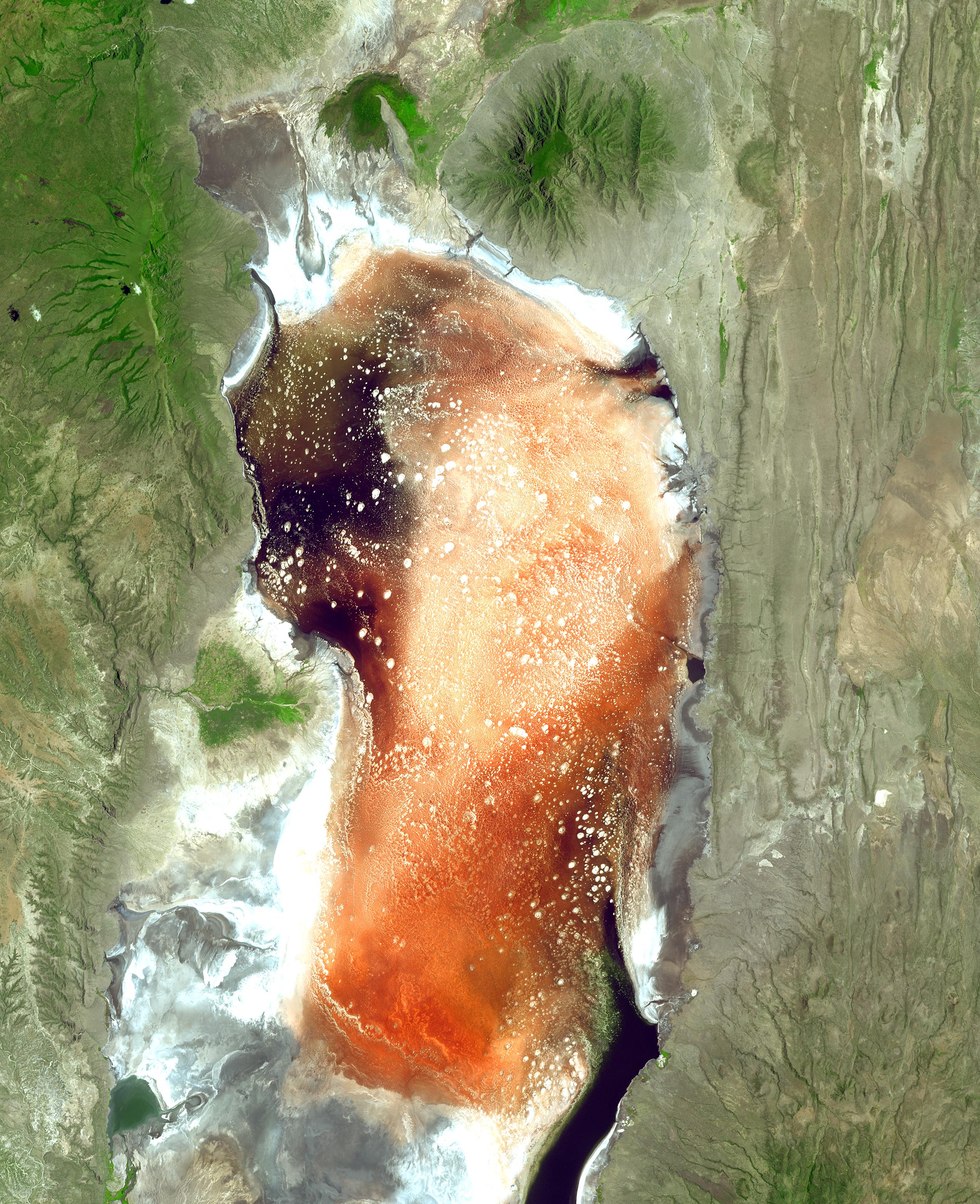
      नीचे दिखलाई गई एक तस्वीर अंतरिक्ष से ली गई है उस अंतरिक्ष में स्थापित उपकरण से जिसे -

      The Advanced Spaceborne Thermal Emission and Reflection Radiometer (ASTER)कहा जाता है। 

      यह एक दूर नियंत्रण प्रणाली संचालित संवेदी यंत्र  है जिसे अमरीकी  अंतरिक्ष  संस्था नासा ने अपने एक उपग्रह टेरा (TERRA -Thermal Emission and Reflection Radiometer )पर तैनात किया हुआ है .यह उच्चतर विभेदकता वाली तस्वीरें पृथ्वी की भेजता रहा है तथा ये तस्वीरें दृश्य और तापीय अवरक्त विकिरण रेंज में हैं। झील के सतह  के जल के तापमान का भी इस से कयास लगाया गया है। 

      अब सवाल यह उठता है झील में इतना लवण आख़िर  आया कहाँ से ?

      समझा जाता है इसके लिए वह ज्वालामुखीय राख जिम्मेवार है जो ग्रेट रिफ्ट वैली से लोकल बैसिन्स तक पहुंची है। लवणीय झील उसी की सृष्टि है। फ्लेमिंगो पक्षी यहां प्रजनन के बाद अंडे देने और सेने आते हैं क्योंकि शिकारी पक्षी यहां पहुँचने से कतराते हैं अतः अंडे सुरक्षित रहते हैं। अलबत्ता फ्लेमिंगो पक्षियोंको भी सावधान रहना पड़ता है। झील कभी भी उनके प्रति भी एक  दम से प्रतिकूल हो सकती है । कब ?इसका कोई निश्चय नहीं। 

      सब कुछ बरसात के हाथों का खेला है। बरसात होने पर इसकी लवणीयता अमोनिया के सम-कक्ष हो जाती है। बरसात का  अतिरिक्त   पानी भरने पर इस झील  के पानी का तापमान झुलसाने वाले ६० सेल्सियस यानी १४०  फारेनहाइट तक बढ़ जाता है।  


      Lake Natron, in Africa’s Great Rift Valley, practically sends a warning with its color. This bright red lake is the world’s most caustic body of water, but not to everything. An endemic species of fish, the alkaline tilapia, lives along the edges of the hotspring inlets, and the lake actually derives its color from salt-loving microorganisms that thrive in its alkaline waters. Spirulina, a blue-green algae with red pigments, passes its pigments along to the Lesser Flamingoes that feed on the algae and raise their young here.
      The Advanced Spaceborne Thermal Emission and Reflection Radiometer (ASTER) flying on the Terra satellite captured this image on March 8, 2003. This image simulates natural color, showing where the salt-loving microorganisms have colored the lake’s salt crust red or pink. The salt crust changes over time, giving the lake a slightly different appearance each time it is photographed by astronauts or imaged by satellites.
      Volcanic ash from the Great Rift Valley has collected in local lake basins, creating a network of soda lakes hostile to most organisms. This forbidding environment enables Lake Natron to serve millions of flamingoes as the ideal nursery; would-be predators avoid the saline lake and leave young birds in peace. Flamingoes must exercise caution, however, because the lake can turn deadly even to them. Depending on rainfall, its alkalinity can approach that of straight ammonia, and when the lake is flooded with water that has heated underground, its temperature can reach a scalding 60 degrees Celsius (140 degrees Fahrenheit).
      The uniqueness of Lake Natron prompted Tanzania to add the lake to the Ramsar List of Wetlands of International Importance on July 4, 2001.
      NASA image courtesy NASA/GSFC/METI/ERSDAC/JAROS, and U.S./Japan ASTER Science Team


      TERR stands for Thermal Emission and Reflection Radiometer

      क्यों बन जाती है लेक नाट्रन पक्षियों का कब्रगाह ?

      रविवार, 4 नवंबर 2018

      Lake That Turns Animals to Stone? Not Quite


      •  
      •  
      •  


      Lake That Turns Animals to Stone? Not Quite
      The body of a flamingo on Lake Natron, as captured by photographer Rick Brandt.
      Credit: © Nick Brandt 2013 Courtesy of Hasted Kraeutler Gallery, NY
      Lake Natron in Tanzania is one of the most serene lakes in Africa, but it's also the source of some of the most phantasmagorical photographs ever captured — images that look as though living animals had instantly turned to stone.
      The alkaline water in Lake Natron has a pH as high as 10.5 and is so caustic it can burn the skin and eyes of animals that aren't adapted to it. The water's alkalinity comes from the sodium carbonate and other minerals that flow into the lake from the surrounding hills. And deposits of sodium carbonate — which was once used in Egyptian mummification— also acts as a fantastic type of preservative for those animals unlucky enough to die in the waters of Lake Natron.
      Despite some media reports, the animal didn't simply turn to stone and die after coming into contact with the lake's water. In fact, Lake Natron's alkaline waters support a thriving ecosystem of salt marshes, freshwater wetlands, flamingos and other wetland birds, tilapia and the algae on which large flocks of flamingos feed. Now, photographer Nick Brandt has captured haunting images of the lake and its dead in a book titled "Across the Ravaged Land" (Abrams Books, 2013). [Photos: Lake Natron Gives Up Its Dead]

      During breeding season, more than 2 million lesser flamingos (Phoenicopterus minor) use the shallow lake as their primary breeding ground in Africa. The flamingos' nests are built on small islands that form in the lake during the dry season.
      Lake Natron is one of two alkaline lakes in that area of East Africa; the other is Lake Bahi. Both are terminal lakes that do not drain out to any river or sea; they are fed by hot springs and small rivers. As shallow lakes in a hot climate, their water temperatures can reach as high as 106 degrees Fahrenheit (41 degrees Celsius).
      The serenity of Lake Natron — and its flamingo population — are threatened by a proposed hydroelectric power plant on the Ewaso Ngiro River, the main river feeding the lake. As isolated as the lake is (it wasn't even discovered by Europeans until 1954), there are no protections in place for the lake or its threatened flamingo population.

      https://www.livescience.com/40135-photographer-rick-brandt-lake-natron.html

      इस झील में जो गया, बन गया पत्थर, घूमे जरा संभलकर


      इस झील में जो गया, बन गया पत्थर, घूमे जरा संभलकर

      • आपने अपने बचपन में वो राजा वाली कहानी तो जरूर सुनी होगी जिसको एक वरदान मिलता है कि वो जिस चीज को छुएगा वह सोने की हो जाएगी। लेकिन वो तो एक कहानी थी। क्या असली में ऐसा हो सकता हैं।
      • आपने अपने बचपन में वो राजा वाली कहानी तो जरूर सुनी होगी जिसको एक वरदान मिलता है कि वो जिस चीज को छुएगा वह सोने की हो जाएगी। लेकिन वो तो एक कहानी थी। क्या असली में ऐसा हो सकता हैं। जी हाँ , ऐसा बिलकुल हुआ है। बस यहां  राजा की जगह यह ताकत एक झील में हैऔर चीजें सोने की जगह पत्थर की हो जाती हैं। उस झील का नाम हैं लेक नेट्रान (Lake Natron) जो कि उत्तरी तंजानिया में स्थित हैं। 
      • झील के किनारे जगह-जगह पशु-पक्षियों के स्टैच्यू नजर आते हैं। स्टैच्यू असली मृत पक्षियों के हैं। दरअसल झील के पानी में जाने वाले जानवर और पशु-पक्षी कुछ ही देर में कैल्सिफाइड होकर पत्थर बन जाते हैं।


        दरअसल, पानी में नमक और सोडा की मात्रा बहुत ही  ज्यादा  है, इतनी ज्यादा  की कुछ भी गिरने पर कुछ ही सेकंड में जम जाता है। पानी में सोडा और नमक की ज्यादा मात्रा इन पक्षियों के मृत शरीर को सुरक्षित रखती है।
      • इस झील के पानी में अल्कलाइन का स्तर पीएच 9 से पीएच 10 है, यानी अमोनिया जितना अल्कलाइन रहता है । लेक का तापमान भी 60 डिग्री तक पहुंच जाता है। पानी में वह तत्व भी पाया गया जो ज्वालामुखी की राख में होता है। इस तत्व का प्रयोग मिस्रवासी ममियों को सुरक्षित करने के लिए रखते थे। इसलिए इस  नज़ारे  को देखने के लिए जब भी जाएं। उस समय सावधानी बरते। ताकि आप सुरक्षित रहते हुए इन नजारों को अपने जेहन में कैद कर सकें।
      • सन्दर्भ -सामिग्री :
      earthobservatory.nasa.gov/images/5465/lake-natron-tanzania
      Lake Natron, in Africa’s Great Rift Valley, practically sends a warning with its color. This bright red lake is the world’s most caustic body of water, but not to everything.
      • www.livescience.com/40135-photographer-rick-brandt-lake-natron.html
        Lake Natron in Tanzania is one of the most serene lakes in Africa, but it's also the source ofsome of the most phantasmagorical photographs ever captured — images that look as though living ...

      गुरुवार, 1 नवंबर 2018

      मरिये तो मर जाइये ,छूट परे जंजार , ऐसा मरना क्यों मरे, दिन में सौ सौ बार

      मरिये तो मर जाइये ,छूट परे जंजार  ,    ऐसा मरना क्यों मरे, दिन में सौ सौ बार

      मरूँ मरूँ तू क्या करे ,मेरी मरे बलाय ,

      मरना था सो मर गया ,अब को मरने जाय।

      मरिये तो मर जाइये ,छूट परे जंजार  ,

      ऐसा मरना क्यों मरे, दिन में सौ सौ बार।

      भावसार :मेरी तो आशा -तृष्णा मिट गई मोह मिट गया। मृत्यु का भय भी समाप्त हो गया। भोगने खाने कमाने की अब कोई कामना ही शेष नहीं रही। अब मेरा अहंकार भी मिट गया। मौत का स्वागत करते हैं।

      कबीर कहते हैं मरूँ मरूँ क्या करता है मेरी तो आशक्ति मिट गई कामना मर गई। अब मैं मौत से क्यों डरूँ ?

      सारी  बला समाप्त  ,जीते जी मुक्ति मिल गई मुझे तो। मुझे जो मिला है उससे मैं संतुष्ट हूँ। मेरी इसलिए कोई शिकायत भी शेष नहीं रही।

      महनत करो फिर जो मिले उसमें संतोष करो। असंतोष ही सारे दुखों की जड़ है।

      अहंकार ही मौत है तृष्णा ही मौत है अहंकार का विसर्जन अभय है। कामनाओं को असंतोष को छोड़ दें मृत्युंजय बन जाएँ। जीवन में सद्गुणों के विकास के लिए गुणात्मक विकास हो भौतक सामग्री को जुटाने वाला मात्रात्मक विकास विकास नहीं है अपविकास है। जिससे हमारा सामजिक और बाहरी परिमंडल पारितंत्र पर्यावरण भी छीज रहा है।

      जिसने महा-मृत्युंजय मन्त्र लिखा वह भी इस दुनिया से चले गए तुम कैसे बचोगे इसलिए जो करना है वह तो करो। जीते जी मृत्यु के पार जाना है तो  तृष्णा को मारना अहंकार को मारना कामनाओं को मारना। कोई गुस्सा कर रहा है तो आप मर जाएँ अहंकार को मारना है  ऐसा करना। ऐसा मरना ही मरना है आप चुप रहें हँसते रह जाए। अपने आपको पूरी तरह से सबसे छोटा और विनम्र बना लेना ही मरना है। ऐसा मरना एक बार ही होता है बार बार नहीं। बार -बार के नर्क से मुक्ति है अहंकार को मारना।